


Berlin is the easiest educational destination in Europe to justify and one of the easiest to operate badly. A head of history does not need persuading: the Wall, the Holocaust, the Cold War and reunification are all on the syllabus and all still visible in the street. The problem is that the city's best sites are free, open-air and unticketed, which tempts operators to plan them as a walk rather than as a programme. A free site with no booking is also a site with no group slot, no educator and no fallback when forty-five students arrive at the same time as three other schools. The programmes that hold up are the ones that treat Berlin's open-air history with the same contracting discipline as a timed museum.
What Berlin teaches, by subject
Berlin covers more than the twentieth century, and the strongest programmes pick two strands and go deep rather than sampling everything.
- Twentieth-century history — The obvious strand and the one with the most institutional support. The Berlin Wall Memorial on Bernauer Straße, the Topography of Terror on the site of the Gestapo headquarters, the Memorial to the Murdered Jews of Europe with its Information Centre, the former Stasi headquarters in Lichtenberg and the Tränenpalast border crossing all run education formats for groups. Each is a lesson in itself; the value is in sequencing them so that the group reads the century in order.
- Politics and citizenship — The Reichstag building and the government district are a working lesson in a federal parliamentary system, and the Bundestag's visitor service takes school and university groups by advance registration. Pair it with the Federal Foreign Office's public programmes or a visit to a state parliament and a politics group has a full day.
- Art and architecture — Museum Island for the classical collections, the Bauhaus legacy, the Libeskind building of the Jewish Museum as a piece of architecture that is itself the exhibit, and the post-war and post-reunification city as an open-air seminar in urban planning. One museum chosen by the syllabus is a morning; three is a wasted day.
- Science and technology — The German Museum of Technology and the Science Center Spectrum for younger cohorts; for sixth form and university groups, the research campuses in Adlershof and Dahlem, which take institutional visits when they are arranged as a visit and not as a tour.
- German language — Berlin is a strong immersion destination precisely because it is not a postcard city: students hear the language in a working capital, and the memorial sites offer guided formats in German at a level a language group can follow.
"A Berlin programme built from two subject strands and three districts is cheaper to operate and easier to defend than one built from a list of free sites."
Sequencing the day for a full coach group
Berlin is large. The distances between the districts are the constraint that most itineraries underestimate, and the mistake that costs the most time is crossing the city twice in a day. The working rule is one district per half-day, with the coach doing the transfer between districts and never shadowing the group inside them.
Mitte — government district and Cold War core. The Brandenburg Gate, the Reichstag, the Memorial to the Murdered Jews of Europe, the Topography of Terror and Checkpoint Charlie are within walking distance of each other and form a coherent half-day. Two things shape it: the Reichstag visit is by advance registration only, and the Memorial's Information Centre runs group tours capped at 25 people per guide, so a coach group is two or more sub-groups booked in parallel. Checkpoint Charlie is crowded from mid-morning; if it is on the programme, it is the first stop, not the last.
Bernauer Straße and Prenzlauer Berg — the Wall as it was. The Berlin Wall Memorial is the site where the Wall, the death strip and a watchtower survive in situ, and it runs history and civic education formats for groups. It pairs naturally with a walk through Prenzlauer Berg for the everyday context of East Berlin, and it is a calmer site than Checkpoint Charlie for a structured lesson.
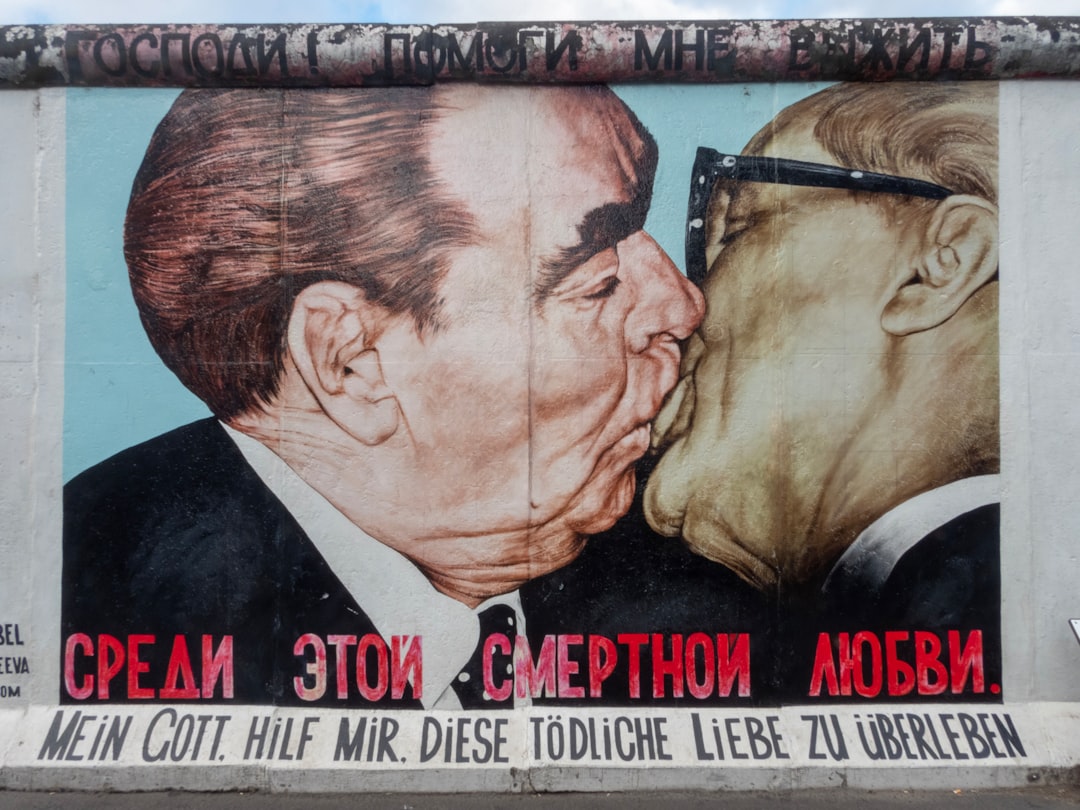
Friedrichshain — East Side Gallery. The longest surviving stretch of Wall is free, open-air and photogenic, which is exactly why it is best done early or late in the day and why the coach drop and pick-up points need to be fixed in advance: there is no waiting area for a coach along the gallery itself.
Lichtenberg — the Stasi. The former Ministry for State Security headquarters is the one site most itineraries skip and the one that most changes how students understand the East German state. It is a transfer away from the centre, so it is a half-day on its own, paired with the Stasi records agency's exhibitions when the group is old enough for them.
Kreuzberg — the Jewish Museum. A half-day on its own for a history or an art strand. Group visits are booked in advance, and the museum's education department runs formats by age group; a coach group is split for the guided formats.
Day trips. Potsdam for the Prussian state and the Cecilienhof conference; the Sachsenhausen memorial for a Holocaust strand, which runs structured programmes for school groups and guidance for tour agencies and is not visited as a stop on the way somewhere else. Both are within a comfortable day; both lengthen driver hours quickly.
The calendar traps
Berlin's peak season is the summer, and a school programme rarely lands in it. The dates that catch educational operators are elsewhere.
The trade-fair weeks. Berlin is a congress city, and in a fair week group accommodation across the city is contracted to corporate demand at corporate rates. The week that matters most for an educational operator is ITB, the travel trade fair itself, which the organisers date well in advance; a school programme that lands in that week is usually not operable at the budget it was sold at. The Berlinale film festival in February moves the market in the same way for a smaller part of the city.
The commemorative dates. The anniversary of the fall of the Wall on 9 November and the days around 27 January bring official ceremonies and school programmes from across Germany to the memorial sites. They are the most powerful weeks of the year to be in Berlin with a history group, and the weeks in which the education slots at the memorials are taken furthest in advance. A group that wants them plans for them at contracting, not at departure.
The Berlin school calendar. The city's own schools use the same memorial sites in term time, and the Berlin school holiday calendar is published years ahead. A foreign group planning around its own half-term is planning blind to this unless someone is checking the local calendar for it: the weeks just before and after a Berlin holiday are the busiest for education slots, and the holiday weeks themselves are the quietest.
Outside those, the useful windows are the ones most educational destinations share: mid-March to early June, and late September to mid-November. The weather allows the open-air sites to be taught rather than endured, and the institutions are open and staffed.
Coach, walking and the low-emission zone
Berlin's centre is inside a low-emission zone, and coaches registered abroad need the green sticker to circulate in it in the same way as German vehicles. A coach that arrives without one is a coach that is not entering the centre, whatever its emissions standard, so the sticker is settled before departure, not on arrival. The same source lists the designated coach parking areas; the practical point is that the day is designed around where the coach can stop and wait, not around where the group would like to be dropped.
Within the districts the group walks, and the coach does the transfers, the airport run and the day trips. A Berlin programme with Potsdam or Sachsenhausen on it, an early hotel departure and an evening transfer can reach the limits of EU Regulation 561/2006 on driving time, and the driver's clock is not negotiable.
Where to base a group, by what it is studying
The base district follows the subject, because the walking is the programme and a group that starts the day where its first site is saves a transfer every morning.
- Mitte — History and politics programmes. Everything in the government district and Cold War core is on foot; the constraint is coach access, which is a system of drop-off points rather than parking.
- Friedrichshain and the eastern side of Mitte — History programmes centred on the Wall and the East, with the East Side Gallery within reach and the hotel stock that takes school groups most readily.
- Kreuzberg — Art and architecture programmes, and mixed programmes for older cohorts, with the Jewish Museum and the Technology Museum on the doorstep.
- Charlottenburg — Only when the programme is built on the pre-war West and the museums of the old western centre; otherwise it adds a transfer to every day.
The binding constraints for school accommodation in Berlin are the ones we specify on every brief: enough rooms of the same category in one property, staff rooms on the same floor as the students, a coach drop that does not involve a walk with luggage, and a property that takes school groups in that season, because in a congress city a number of otherwise suitable ones do not.
Frequently asked questions
Can a class of 45 visit the Reichstag dome as one group?
Only by advance registration through the Bundestag's visitor service, and the slot is what determines the shape of that half-day. Guided formats for school classes are separate from the open dome visit, and a large group is registered as sub-groups.
Which weeks should a Berlin school programme avoid?
The major trade-fair weeks, above all ITB in March, when group accommodation is taken by corporate demand. The commemorative weeks around 9 November and 27 January are not weeks to avoid but weeks to book early: the education slots at the memorials go first.
How many subjects should a five-day Berlin programme cover?
Two strands, chosen with the teacher, and three districts. Berlin is large enough that a programme sampling every subject spends its days on the coach.
Does the low-emission zone affect a foreign school coach?
Yes. Coaches registered abroad need the green sticker to circulate in the zone, which covers the centre. It is confirmed at contracting, together with the vehicle's emissions standard for every city on the programme.
Are Berlin's free memorial sites really free for a group?
Entry is, in most cases. The educator, the group slot and the sub-group split are not, and without them a free site is a crowd. The programme budgets for the education formats at the sites the teacher cares most about.
Building a Berlin programme?
BRACAP operates ground product for educational groups across Europe, from Barcelona to Berlin. The checks above — subject strands, district sequencing, the fair and commemorative weeks, the local school calendar, coach registration and sub-group sizes at the memorials — are the first things our team runs on a Berlin brief, the same way we run them on a Barcelona brief. Send us the group size, the dates and the subjects the teacher wants covered, and we will come back with the day structure that works at that scale and what has to be locked first. See how we operate educational groups, or send us the brief and request a proposal.


