


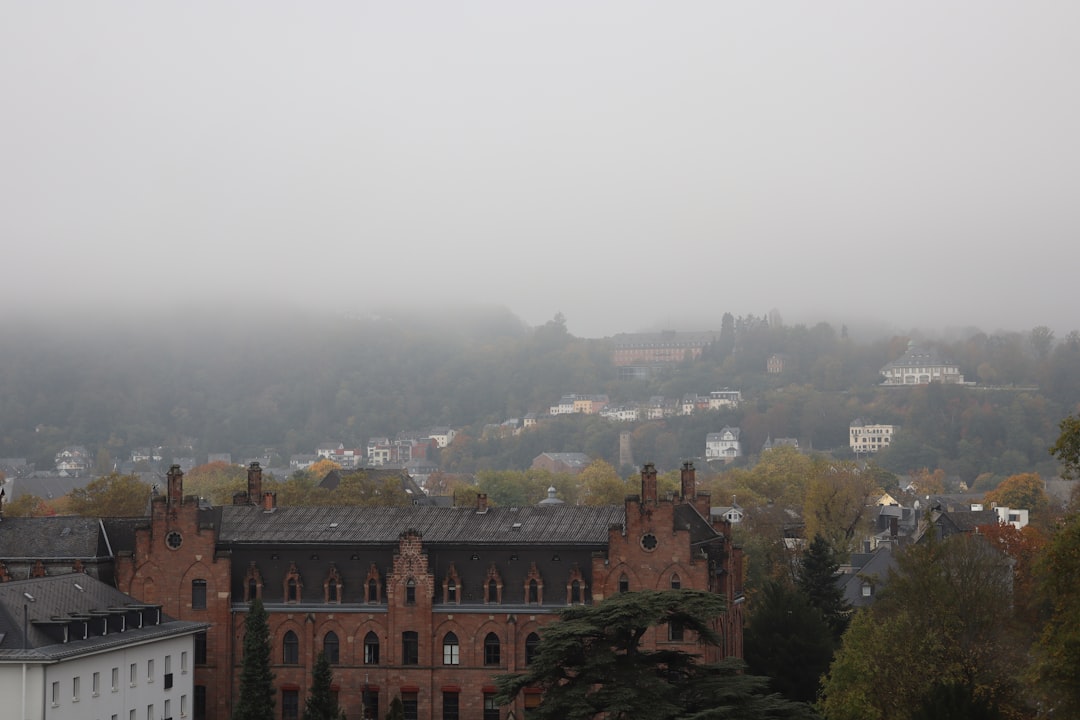
Autumn is the season that rewards travellers who slow down. The summer queues have thinned, the light is longer and lower, and the cities that get overlooked between June and August quietly become themselves again. What follows isn't a checklist. It's a short editor's notebook on five smaller European cities where a week feels better than a weekend, written for the kind of traveller who'd rather sit in one square for an hour than tick off six in a morning.
The principle behind it is borrowed from the slow movement, a cultural shift that argues for a more thoughtful, deliberate pace in everyday life. Apply that to a city break and the maths changes: fewer trains, longer breakfasts, the same museum visited twice.
Ghent, Belgium — the Flemish city Bruges-goers miss
Ghent sits forty minutes by train from Brussels and roughly half an hour from Bruges, and most coach tours sail straight past it. That's the point. The medieval centre around Graslei and Korenlei is walkable in twenty minutes, but the real pleasure is the stretch east of Vrijdagmarkt, where student bars, second-hand bookshops and the odd vegetarian kitchen (Ghent declared itself a weekday-veggie city back in 2009) take over.
Tickets to the Ghent Altarpiece at Saint Bavo's Cathedral run around €16 with the AR experience, and October is the month I'd choose: the canals catch the light differently when the plane trees turn. Stay near Patershol if you want quiet cobbles after dark.
Trieste, Italy — coffee, wind and Habsburg ghosts
Trieste is technically Italian and emotionally something else — a port city closer to Ljubljana than to Venice, shaped by Austrian, Slovene and Jewish histories that still show in the bakeries. The grand cafés are the obvious starting point: Caffè San Marco on Via Cesare Battisti has been open, on and off, since 1914, and an espresso still costs roughly €1.50 at the bar.
The bora, the cold north-easterly wind, picks up from October onward, so pack a windproof layer and accept that walking the Molo Audace at dusk will rearrange your hair. Take the number 2 tram up to Opicina if it's running again — service has been intermittent for years — for the view back over the Gulf.
Porto, Portugal — quieter than Lisbon, gentler than you remember
Porto in November is a different city from Porto in July. The Ribeira clears out, the port lodges in Vila Nova de Gaia drop their tour prices (cellar visits at Graham's or Taylor's hover around €20-30 with tastings), and the Bolhão market, fully reopened after its long renovation, settles back into being a place locals actually shop.
I'd give it five days and resist the temptation to day-trip to the Douro until the last one. Walk Rua de Miguel Bombarda for the galleries, eat at a tasca where the menu is on a chalkboard, and take the suburban train to Espinho for an off-season beach lunch. A folding umbrella is non-negotiable.
Ljubljana, Slovenia — a capital that feels like a town
Ljubljana has under 300,000 people and you can cross the centre on foot in fifteen minutes. The Ljubljanica river bends through it, lined with the Plečnik bridges that give the city its quiet architectural signature. Cars were banished from the old town in 2007, which is why coffee on Stari trg feels closer to a village square than a capital.
The Saturday morning Open Kitchen food market runs from spring through October, so late-season visitors should aim for the first weekend of the month if they can. From Ljubljana, the train to Lake Bled takes about forty minutes and costs under €10 return — a fair definition of a good day out.
Leipzig, Germany — Bach, books and a slower Berlin
Berlin gets the headlines; Leipzig gets on with it. The city that produced Bach and printed half of Europe's books in the nineteenth century has spent the last decade quietly absorbing artists priced out of the capital. The Spinnerei, a former cotton mill turned gallery complex on the western edge, opens its studios for a weekend each autumn — worth timing a trip around.
The Thomaskirche, where Bach worked for twenty-seven years, holds Friday-evening and Saturday-afternoon motets sung by the boys' choir; tickets are typically €2 at the door. Stay in Plagwitz or Südvorstadt rather than the centre, and you'll eat better.
How to actually slow down
The mechanics matter more than the intention. Book one base, not three. Take the train where you can — the Trieste-Ljubljana coach runs in around two and a half hours for under €20, and Ghent to Brussels is a ten-euro hop. Plan one fixed thing per day and leave the rest open. Eat lunch where you ate breakfast if it was good. Re-read the same chapter on the same bench.
For most of these cities, mid-October to mid-November is the editor's pick: shoulder-season prices, museums without queues, and weather that justifies a long lunch indoors. Pack layers, a proper raincoat, shoes you'd walk ten kilometres in without thinking, and one book you've been meaning to finish. If you're choosing only one for this autumn, make it Trieste — it's the city that most rewards doing nothing in particular, slowly.


